Blog
Everything About the SIA Door Supervisor Course in 2025

Have you ever stopped to think about what goes into becoming a door supervisor in the UK? It all begins with the right SIA Door Supervisor Course, the essential training that prepares you for the job. You see door supervisors at busy venues, keeping things in order, managing crowds, and stepping in when needed. They’re a steady presence in all kinds of places, but most people don’t really know what it takes to stand in that position. If the thought has ever crossed your mind or you’re just curious about how it works, this is where it starts.
What is a Door Supervisor Course?
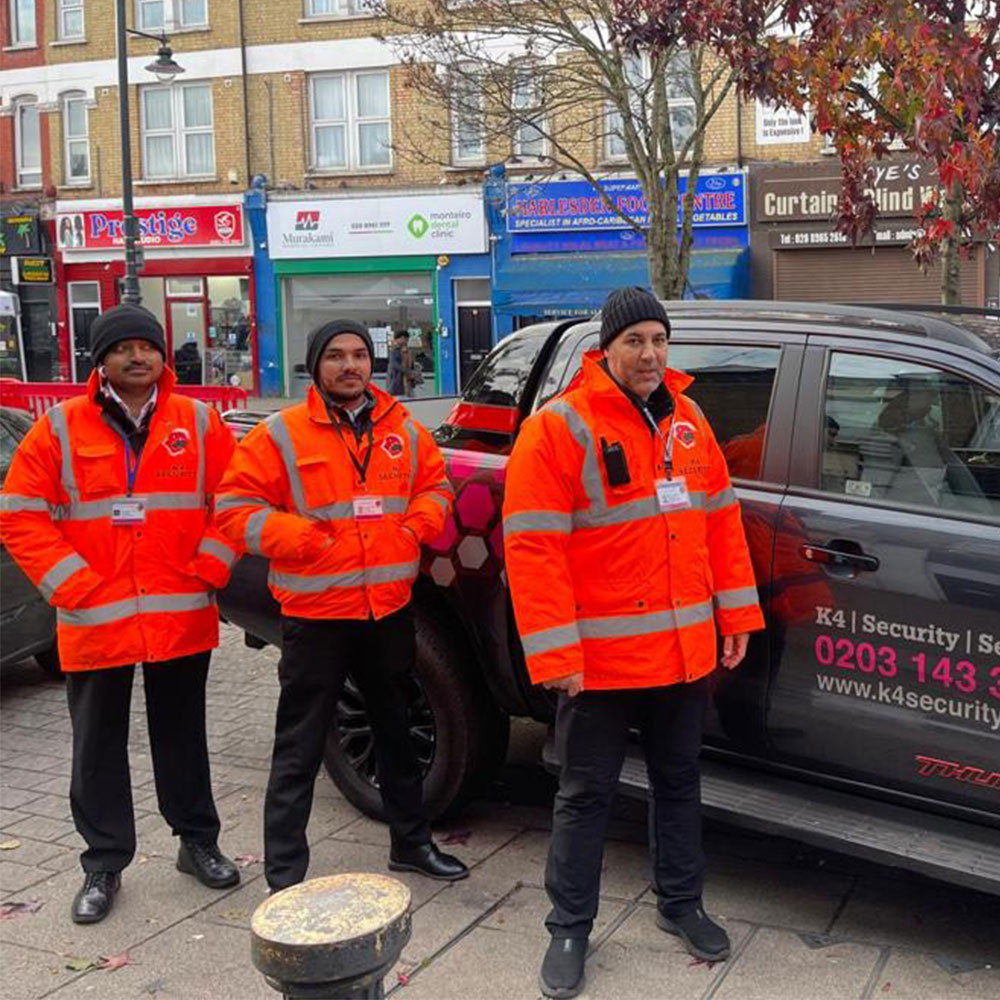
An SIA door supervisor course equips you to get licensed to work in various settings where public safety and security are needed. You’ll usually find them at venues like nightclubs, bars, festivals, shopping centres, hotels, and even private events. Their main role is to make sure people are safe, situations are handled calmly, and any potential risks are dealt with quickly and professionally. But it’s not just about standing by the door checking IDs, instead, the job involves a mix of communication, observation, and decision-making.
An SIA Door Supervisor Course should make you learn to be alert, approachable, and able to defuse tension before things escalate. They often deal with large crowds, manage entry and exit points, carry out bag or ID checks, and sometimes need to support emergency services if something serious happens. Good customer service plays a big part too. Since you’re often the first person guests interact with, how you present yourself can set the tone for their experience.
In the UK, you can’t legally work in this role unless you have an SIA licence. That means completing the required training and passing background checks. It’s a position of responsibility, and the right training makes sure you’re ready to handle whatever comes your way.

Who Needs the SIA Door Supervisor Licence?
If you’re planning to work in any security role that involves guarding premises where alcohol is served to the public, you’ll need an SIA Door Supervisor Course. This includes jobs at nightclubs, bars, pubs, music venues, and certain late-night restaurants. It also applies to events and festivals where crowd control and safety are part of your duties.
The licence is required even if you’re not stationed at the door. If your role involves managing queues, checking tickets, monitoring behaviour, or stepping in to prevent disorder, then you’re legally expected to hold one. Many security jobs in shopping centres, stadiums, casinos, and hotels also fall under this requirement when the public is present and alcohol may be available.
Some people think they can get by with just a general SIA door supervisor licence, but that’s not the case for venues with alcohol. The door supervisor course covers more ground, which allows you to work in a wider range of environments. Without it, you’re not just missing out on job opportunities, but you’re also breaking the law if you’re caught working where it’s required.
What are the SIA Licence Requirements?
If you’re someone who’s confident, calm under pressure, and enjoys working with people, getting an SIA door supervisor licence might be the perfect fit. Whether it’s greeting guests at a busy nightclub, ensuring safety at a concert, or managing crowd flow at a large venue, door supervisors are often the first point of contact and the first line of defence. This role is about awareness, communication, and being able to read situations quickly and respond appropriately. It suits individuals who can stay professional in high-pressure environments while never missing out on a friendly and respectful presence.
To have a SIA door supervisor licence in the UK, you must be at least 18 years old and complete an approved training course accredited by the Security Industry Authority (SIA). This course includes modules on conflict management, physical intervention, and the legal aspects of working in private security. Once SIA door supervisor training is successfully completed, you can apply for your SIA licence, which is mandatory to work legally in this role. Although it is not essential to have a background in customer service or previous security work, if you have it, you are already at an advantage. Employers also value individuals with strong situational awareness, basic first aid knowledge, and a good level of physical fitness.
How long is the SIA door supervisor course?
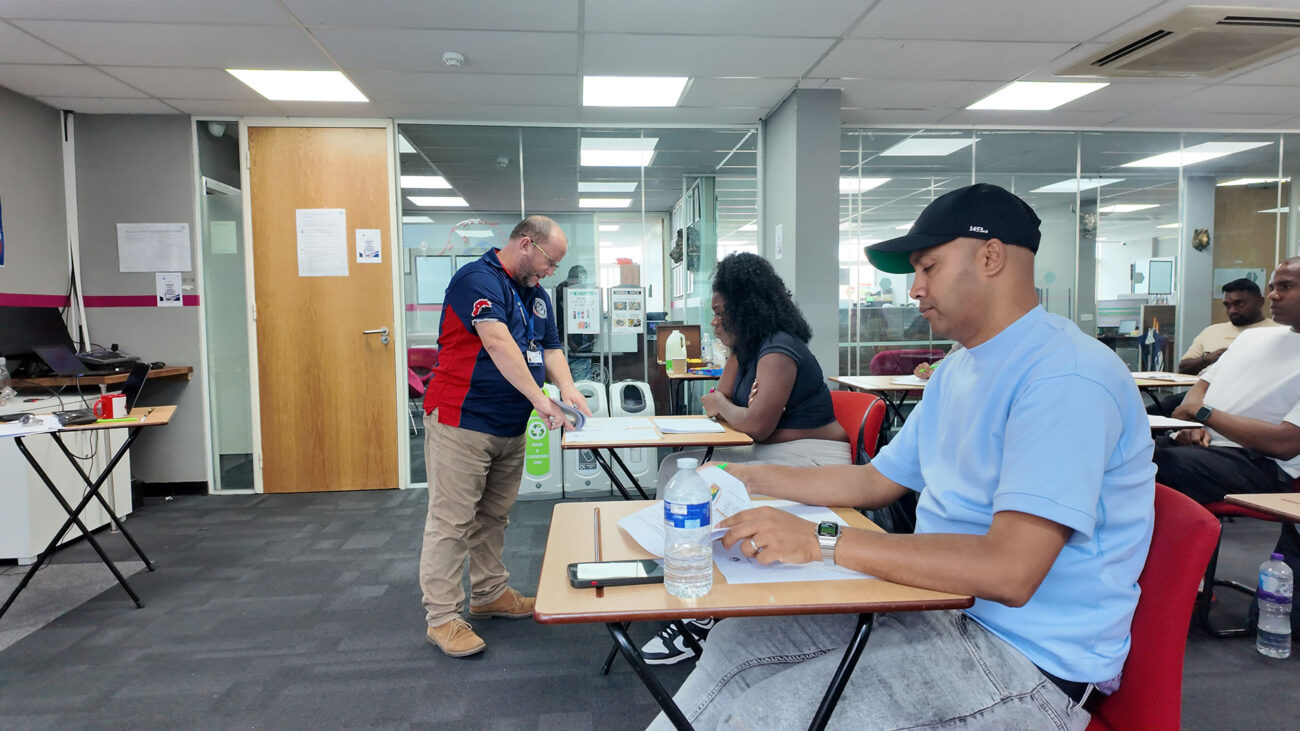
The SIA door supervisor course is a nationally recognised qualification designed to meet the licensing criteria set by the Security Industry Authority (SIA) for individuals working in frontline security roles across the United Kingdom. The standard course duration is typically 4 to 6 days, with a minimum of 28–32 contact hours, excluding breaks. As per the law, it is delivered by SIA-approved training providers, and the course follows a regulated framework which consists of four core units: Working in the Private Security Industry, Working as a Door Supervisor, Conflict Management, and Physical Intervention Skills. These modules are structured to provide candidates with legal knowledge, situational awareness, and operational competency essential for managing high-risk environments and public-facing security roles.
Assessment for the SIA door supervisor course is both written and practical. Candidates must complete multiple-choice exams for theoretical components and demonstrate safe and effective physical intervention techniques under supervision. The training emphasises understanding relevant legislation (e.g. use of force, licensing law), managing vulnerable persons, emergency procedures, and dynamic risk assessment. Upon successful completion, candidates receive a Level 2 Award in Door Supervision, making them eligible to apply for an SIA door supervisor licence.
What are the benefits of joining SIA?
You can have a wide spectrum of career opportunities after your SIA door supervisor badge, where trained professionals are in consistent demand. As a regulatory authority, the Security Industry Authority ensures that all license holders meet strict professional standards, which enables them to work in roles such as door supervision, security guarding, CCTV operation, and close protection. These roles span industries including corporate security, retail loss prevention, transportation hubs, public events, and critical national infrastructure. Taking salaries and wages into consideration, £20,000 to £26,000 for entry-level roles and rising to £40,000–£45,000 for supervisory or specialist positions, SIA-certified professionals consistently earn more than those in many non-technical or unlicensed sectors such as hospitality or general retail. Moreover, certification provides access to roles posted by leading employers such as K4 Security, G4S, Mitie, and local councils, reinforcing its value as a career investment.
The SIA door supervisor licence process develops a wide range of technical competencies that are essential for high-performance security operations. These include dynamic risk assessment, conflict de-escalation, legal frameworks surrounding the use of force, emergency response coordination, and surveillance monitoring using advanced systems. SIA-certified individuals gain proficiency that is highly transferable across high-security environments, including government buildings, corporate headquarters, logistics centres, and energy infrastructure sites. Compared to other vocational qualifications, SIA training delivers deeper operational knowledge and real-world readiness, positioning professionals not just for jobs but for long-term careers in security and protection. This structured skill development, combined with continual demand and clear paths for advancement into roles such as team leader, site supervisor, or risk analyst, makes SIA certification a high-value credential in the UK job market.
What are the new rules for SIA in 2025?
Effective from 1st April 2025, the Security Industry Authority (SIA) implemented substantial regulatory changes to the licensing framework that directly affected all front-line security professionals in the United Kingdom. One of the most significant updates was the mandatory requirement for all new applicants and renewing licence holders in roles such as Door Supervision, Security Guarding, and Close Protection to hold a valid Emergency First Aid at Work (EFAW) qualification or an equivalent Level 3 First Aid certification. This change reflected a broader regulatory shift towards integrating emergency response capability into private security functions, ensuring that personnel were not only licensed but also prepared to respond to on-site medical incidents.
In addition to first aid requirements, qualification standards were revised to align with evolving security threats and heightened professional accountability. Updated SIA door supervisor course incorporates enhanced modules covering counter-terrorism awareness, dynamic risk assessment, and public protection protocols. Training providers were required to deliver content in accordance with new specifications, and candidates needed to demonstrate both theoretical understanding and practical competence under stricter assessment conditions. These changes elevated the threshold for industry entry and promoted a higher standard of professional conduct. For employers and contractors, this necessitated a thorough review of staff qualifications and compliance readiness to maintain operational integrity. Overall, the 2025 SIA door supervisor badge requirements marked a significant step forward in strengthening the professionalism, preparedness, and public safety contributions of the UK’s private security sector.
SIA door supervisor course price in the UK
The UK has some big names in security training, like K4 Training, Get Licensed, and Hurak. So it is normal to feel unsure about where to take your SIA Door Supervisor Course. In most cases, people make the decision based on the price. The course usually costs between £150 and £350. If you do not have a valid First Aid certificate, the cost will be a bit higher.
But price is not the only thing to look at. You should also check what the course includes. Does it match what the job actually needs? Do they talk about real situations you might face while working? Thinking about these things will help you choose the training that really prepares you for the job.
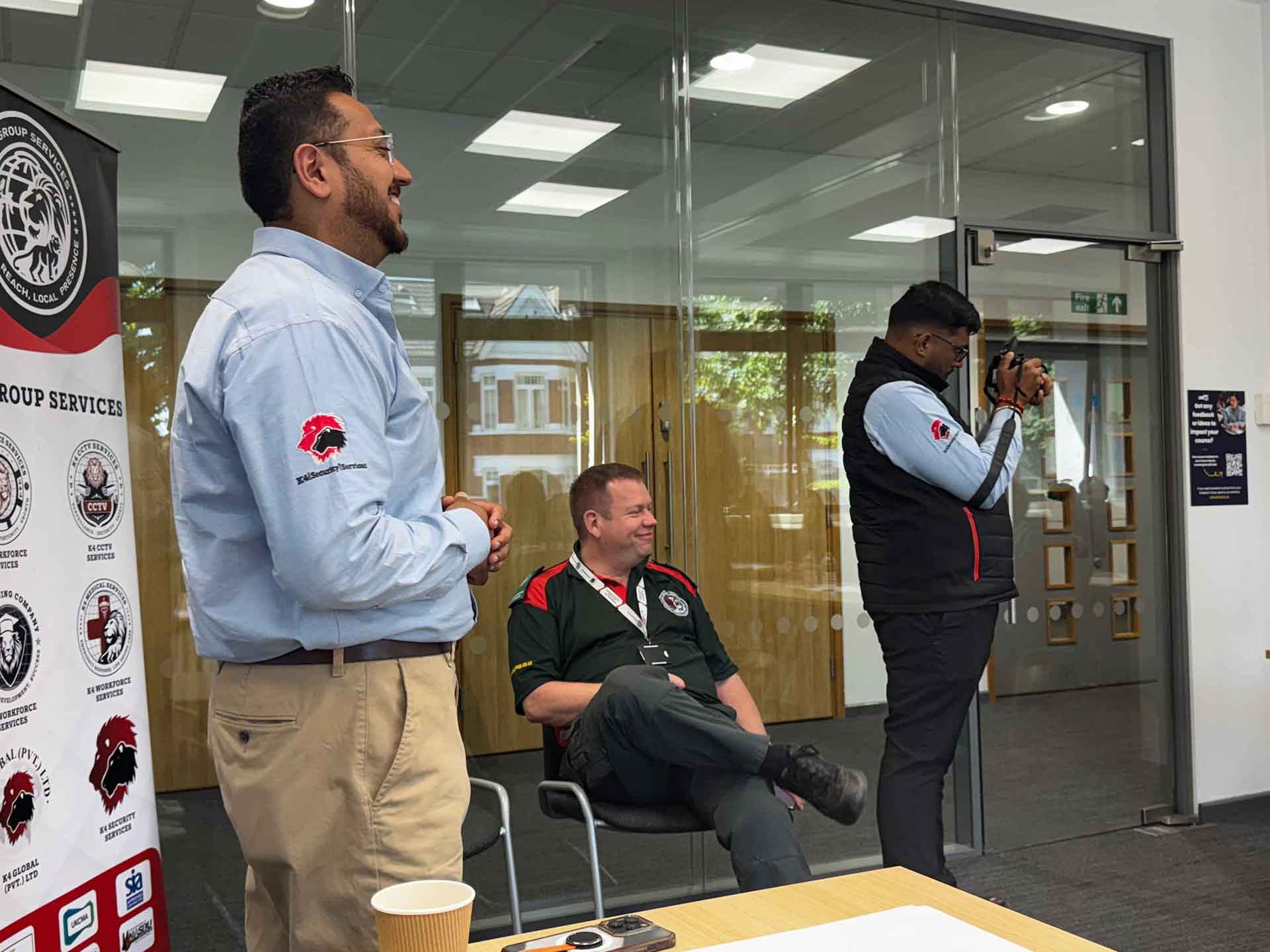
K4 Training provides a structured programme led by instructors who are not only qualified trainers but also active security professionals with real-world operational backgrounds. Our courses are designed to ensure candidates are fully compliant with current SIA standards, while equipping them with the practical knowledge and situational awareness required for today’s frontline roles.
Conclusion
Security is one of the few industries in the UK that’s always growing. The need for trained and reliable professionals never really goes away. If you’re licensed and get the chance to work on premium sites, especially on overnight shifts, you can earn well above the normal rates. That’s where the real value starts to show.
But it’s not just about the pay. Security also offers solid career progression. Once you’re in, there are plenty of ways to move up, whether it’s supervising, working in specialist roles like CCTV or close protection, or stepping into management. It’s a career that gives back what you put into it.