


Blog
FREC 3 Requalification: Everything You Need to Know

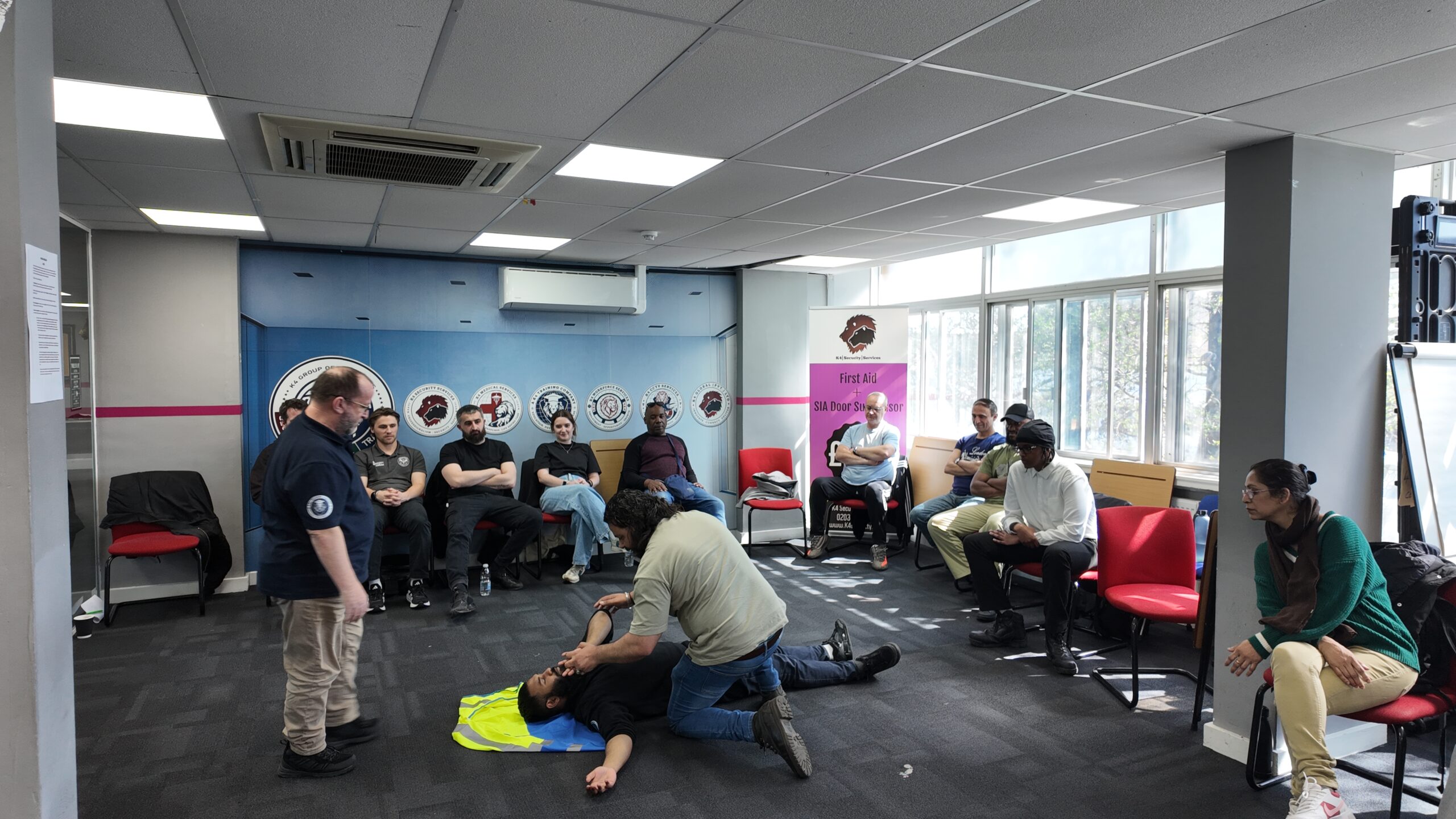
Three years pass faster than you think. One day, you’re walking out of your FREC 3 course with fresh skills and a clean certificate, the next, you’re fielding a panicked call from your employer asking whether your qualification is still in date. For event medics, close protection operatives, and security professionals working in high-stakes environments, that certificate is not a formality. It is the documented proof that you can manage a life-threatening emergency when every second counts.
The good news: staying on top of FREC 3 requalification is entirely manageable when you know what’s involved. The bad news, and this is the part many people learn too late, is that once your certificate expires, you cannot simply top it up. You start again from scratch. This guide covers everything you need to keep your qualification current, your career uninterrupted, and your skills sharp.
What Is FREC 3 and Who Needs It?
The Qualification Explained
The FREC 3, formally the Level 3 Certificate in First Response Emergency Care, is an Ofqual-regulated qualification on the Regulated Qualifications Framework (RQF). It goes well beyond standard HSE first aid requirements and is clinically endorsed by the Faculty of Pre-Hospital Care, part of the Royal College of Surgeons of Edinburgh. That endorsement matters: it tells employers and regulators that the standard has been independently verified against the UK’s prehospital clinical benchmark.
FREC 3 sits at descriptor level D within the PHEM (Pre-Hospital Emergency Medicine) skills framework and serves as the first step in a progressive suite of prehospital care qualifications leading, for those who choose that path, to FREC 4 and beyond.
Who Holds This Qualification?
The range of professionals who carry a FREC 3 is broader than most people outside the sector realise:
- Event medical teams – medics and safety personnel supporting festivals, concerts, and mass gatherings
- Security and close protection operatives – including those working towards or holding an SIA Close Protection licence, for which FREC 3 is a recognised qualification
- Emergency services – police officers, firefighters, and community first responders
- High-risk industries – military personnel, offshore workers, construction staff in elevated-risk environments
- Sports and outdoor events – pitch-side medics and outdoor event staff
- Healthcare volunteers – community volunteer responders filling the gap between 999 calls and ambulance arrival
Why Requalification Is Not Optional
The Three-Year Rule
FREC 3 certificates are valid for exactly three years from the date of issue. After that date, the qualification expires and with it, your legal and professional standing to claim it. There is no grace period. There is no short extension. The clock stops at three years.
Skills Fade Is a Documented Reality
Emergency care skills are perishable. Research published in the Resuscitation journal has consistently shown that CPR quality degrades significantly within months of initial training without regular reinforcement, and that pattern extends to broader clinical skills. The mandatory requalification cycle exists for good reason: it keeps first responders operating at the standard patients deserve.
We’ve spoken to event medics who felt entirely confident in their skills heading into a requalification day, only to find that their approach to structured patient assessment had drifted, or that their airway management technique needed recalibrating. That’s not failure. That’s exactly what the requalification process is designed to catch.
The Rule Nobody Tells You Until It’s Too Late
Here is the single most important fact in this guide: if your FREC 3 certificate has already lapsed, you cannot requalify. The requalification course is exclusively available to holders of a current, in-date certificate. If yours has expired, you must complete the full five-day FREC 3 course from the beginning, regardless of how recently you last qualified.
We’ve seen this catch experienced professionals off guard. It’s worth being direct about it because the assumption that a short refresher course will always be available regardless of timing is a common and costly one.
What Lapses When Your Certificate Lapses
Beyond the professional embarrassment of an expired qualification, the practical consequences are significant:
- Employment eligibility – many event medical and security roles require a valid, in-date FREC 3 as a contractual condition
- Career progression – you cannot advance to FREC 4 or EMT routes without a current FREC 3
- Insurance and liability – providing emergency care without a valid qualification creates serious legal exposure for both you and your employer.
The Requalification Process: Step by Step
Step 1: Check Your Expiry Date
Pull out your certificate and find the expiry date. This is non-negotiable admin, and it should happen now, not in a few weeks. If you’re within eight months of expiry, start researching providers today. Popular course dates fill quickly, and waiting until the last four weeks is a risk you don’t need to take.
Step 2: Confirm Your Certificate Is Still Valid
Before you book anything, verify that your current FREC 3 is in date. Providers will request to see it. If you’re in any doubt about the expiry date or the certificate’s status, contact your original training provider.
Step 3: Find an Approved Training Provider
Look specifically for providers offering the Qualsafe Level 3 Award in First Response Emergency Care (RQF) Requalification. The full qualification title matters because it confirms the course is Ofqual-regulated. An accreditation check on the Qualsafe Awards website takes two minutes and tells you everything you need to know about a provider’s status.
Step 4: Book and Complete the Three-Day Course
The FREC 3 requalification course runs over three days, with a minimum of 21 contact hours. Courses are typically delivered by experienced clinicians, many with frontline ambulance or emergency services backgrounds, which keeps the learning grounded in how emergencies actually unfold rather than how they appear in a textbook.
Step 5: Sit Your Assessments
Assessment is thorough. You’ll complete:
- Six mandatory practical skills assessments – hands-on scenarios testing real-world competence
- Theory assessments – multiple-choice question papers covering core clinical knowledge
- An invigilated examination – a formal knowledge assessment under exam conditions
Some providers also include optional practical assessments covering supraglottic airway devices, inhaled analgesia (Nitrous Oxide and Penthrox), Naloxone administration, and blood glucose measurement. These optional elements can add genuine value depending on the environments you work in.
Step 6: Receive Your New Certificate
Successful candidates receive a Qualsafe e-Certificate, valid for a further three years from the date of completion. Most providers issue certificates by email within two weeks of course completion.
What the Course Covers: The FREC 3 Requalification Syllabus
Think of the requalification course not as a recap, but as a clinical reset. The three-day revisit every core FREC 3 competency with the depth required to confirm and, where necessary, restore professional-level performance.
Core Clinical Areas
| Area | Skills Covered |
| Patient Assessment | Structured primary and secondary survey |
| Airway Management | Airway assessment, emergency oxygen administration |
| Trauma Care | Catastrophic bleeding control, tourniquet use, wound packing |
| Medical Emergencies | Anaphylaxis, asthma, stroke, cardiac events |
| Resuscitation | Adult, child, and infant CPR; AED use |
| Spinal Injuries | Assessment and management |
| Paediatric Emergencies | Child-specific emergency care |
| Burns | Burns and scald assessment and management |
| Environmental Emergencies | Exposure management |
The June 2025 Syllabus Update
The Qualsafe syllabus was revised in June 2025, and if you’re requalifying in 2026, you’ll be trained to these current standards. The key changes include:
- A new three-component mandatory qualification structure
- Reduced Total Qualification Time to 55 hours (down from 60+)
- Enhanced scenario-based learning with a greater emphasis on applied decision-making
- Streamlined assessments better aligned with how clinical performance is evaluated in actual prehospital environments
The analogy that works here is a pilot’s recurrent simulator training; it’s not about teaching you to fly again. It’s about ensuring that when the unexpected happens, your responses are automatic, calibrated, and current.
FREC 3 vs FREC 4: Is Now the Time to Progress?
This is a question worth sitting with before you simply renew at the same level.
FREC 4 builds on the Level 3 foundation with advanced trauma care, complex airway management, medical gas administration, and more demanding patient assessment protocols. And here’s the detail that surprises most people: FREC 4 does not require periodic requalification once achieved.
Over a ten-year career, that distinction is more than an academic one. Three FREC 3 requalification cycles at an average of £245–£300 per course represent a meaningful cumulative cost, plus the time out of work, travel, and administration involved. For professionals working regularly in higher-acuity environments, the case for progressing to FREC 4 rather than renewing at Level 3 is worth serious consideration.
That said, FREC 4 demands a higher level of clinical commitment and is not the right choice for everyone. If you primarily work in event medical settings with a defined scope of practice, requalifying at FREC 3 is entirely appropriate. The decision should reflect the work you do, not just the cost comparison.
Costs and Providers: What to Budget For
What You’ll Typically Pay
Costs vary considerably across the UK, and what’s included in the price varies just as much. As a guide:
- Budget end of the market: around £245 (inc. VAT) for a three-day course
- Mid-range: £280–£320, often including course materials or refreshments
- Premium/specialist providers: up to £500, which may reflect smaller cohort sizes, specialist instructors, or additional optional assessments
Before booking, confirm exactly what the price includes: course materials, certification fees, and whether any optional practical assessments are incorporated.
What to Look for in a Provider
- Qualsafe accreditation (check the Qualsafe Awards register directly)
- Instructors with verifiable frontline clinical backgrounds
- Cohort sizes that allow meaningful practical assessment, not 20 people sharing one manikin
- Clear resit policy before you need it
K4 Training offers FREC 3 Requalification courses at various UK locations. If you’re also looking at initial qualification, the full FREC 3 (First Responder Emergency Care) course is available for those who need to start from the beginning.
Common Mistakes That Cost Professionals Dearly
The same errors come up repeatedly, and all of them are avoidable.
Leaving the booking too late. Reputable providers fill up. If you’re hunting for a course in the final six weeks before your expiry date, you may find limited availability or none in your area. Book at least eight weeks out. Twelve is better.
Assuming you can requalify after expiry. You cannot. This point deserves repeating because the consequences are severe: a lapsed certificate means a full five-day course, not a three-day top-up.
Booking the wrong course. The full five-day FREC 3 and the three-day requalification are different products. Check your booking requalification, not initial qualification.
Not verifying provider accreditation. A course that a Qualsafe-accredited provider doesn’t deliver may not produce a recognised qualification. A quick check before booking takes minutes; discovering the problem after the course does not.
Skipping pre-course preparation. Qualsafe recommends a minimum of ten hours of pre-course reading, specifically the Ambulance Care Essentials textbook, available through Qualsafe. Arriving unprepared doesn’t just reduce your performance in assessments; it undermines the entire point of the requalification.
Key Takeaways
- FREC 3 certificates are valid for three years – requalification must be completed before expiry, not after
- The requalification course is three days (21 hours minimum) – significantly shorter than the full five-day initial course.
- Costs range from approximately £245 to £500, depending on provider and location.
- The June 2025 Qualsafe syllabus update introduced a revised structure, reduced qualification time, and enhanced scenario-based assessment.
- An expired certificate cannot be requalified – you must complete the full FREC 3 course from the start.
- FREC 4 is worth considering if you want to progress clinically and avoid future requalification cycles
Your FREC 3 qualification is a professional asset that you’ve earned and that others depend on. The requalification process exists to ensure the standard remains real, not just a piece of paper from three years ago. Check your expiry date today. If you’re within eight months of it, start the booking process now. The skills you maintain are the ones that perform when it matters.
How often do I need to requalify my FREC 3?
Every three years from the date of issue. You must complete requalification before the certificate expires.
Can I requalify after my FREC 3 has expired?
No. An expired certificate means you must retake the full five-day FREC 3 course from scratch.
How long is the requalification course?
Three days, with a minimum of 21 contact hours.
What does it cost?
Typically £245–£500 inc. VAT, depending on the provider and location.
Does the SIA recognise FREC 3?
Yes. The SIA recognises FREC 3 as a qualifying first aid component when applying for a Close Protection licence.
I hold FPOSi. Can I take the FREC 3 requalification course?
Yes. The requalification course is also available to those holding a valid FPOSi (First Person on Scene Intermediate) certificate.
Can I take the requalification course online?
Practical assessments must be completed in person. Some providers offer blended learning with online pre-study, but the assessed elements require face-to-face attendance.
What if I fail the assessments?
Resit policies vary by provider. Confirm their policy before booking, specifically what additional costs or waiting periods apply.
Can my employer pay for requalification?
Many do, particularly for roles where a valid FREC 3 is a contractual requirement. Raise it before booking.
Does FREC 3 requalification count towards FREC 4 progression?
A valid FREC 3 is a prerequisite for FREC 4 entry. Requalifying keeps that progression pathway open.