


Blog
CCTV Monitoring Services vs Recording: What Businesses Need

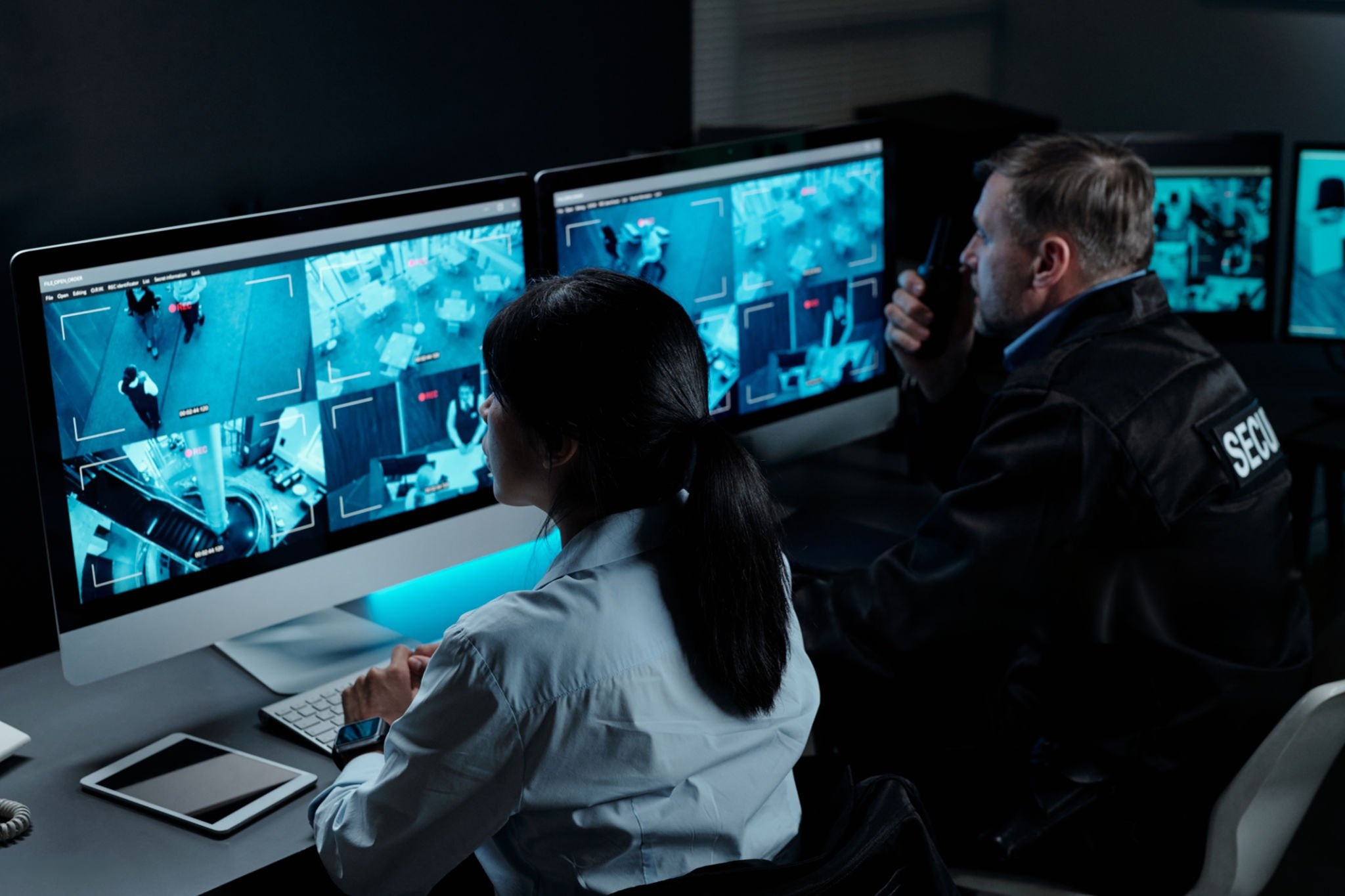
CCTV monitoring services change what security cameras achieve. A convenience store in Manchester lost nearly £18,000 in stock during a single overnight break-in. The cameras recorded everything, but nobody watched until the next morning. That’s the problem with passive surveillance: Cameras capture evidence after the damage is done.
According to the British Retail Consortium, retail crime across the UK continues to rise. Yet many businesses still rely on recorded-only systems reviewed after an incident. That’s where live monitoring changes everything.
Recording Captures Evidence. Live Monitoring Interrupts Crime.
Traditional CCTV systems operate like silent witnesses. Footage is stored on a hard drive or cloud until someone manually checks it later. Sometimes hours later. Sometimes weeks.
But CCTV monitoring services change the entire equation.
Instead of relying on passive recording, trained operators actively watch live feeds from remote control rooms. Suspicious behaviour gets flagged immediately. Police receive verified alerts faster. On-site guards receive real-time intelligence instead of vague radio updates. The system shifts from reactive to proactive. Because recording alone isn’t security, it’s documentation.
Think of recorded CCTV like a voicemail inbox after business hours. Messages pile up quietly while nobody answers the phone. Live CCTV monitoring works more like a receptionist sitting at the front desk, instantly picking up when something feels wrong.
According to the British Security Industry Association, premises protected by professionally monitored surveillance systems experience significantly lower rates of repeat criminal activity compared to sites using passive recording alone.
Why Passive Systems Leave Businesses Exposed
A camera mounted on a wall doesn’t stop a break-in. It doesn’t challenge a trespasser. It doesn’t call emergency services. And criminals know it.
Many offenders now actively test sites before targeting them. A vehicle circles a warehouse twice after midnight. Someone lingers near a delivery entrance pretending to check a phone. A hooded figure taps a side door to see whether alarms trigger. Small behaviours. Tiny signals. But experienced operators catch them on the fly. That’s the difference with CCTV monitoring security.
Who Should Take an Emergency First Aid Course?
As for who should take the course, the simple answer is anyone. Every organisation benefits from having multiple employees trained in first aid because emergencies do not stick to schedules. Accidents can happen when a key staff member is off duty, during shift changes, or even after hours. That is why employers are encouraged to train more than one person within each department or team.
Inside a Professional CCTV Monitoring Control Room
Live feeds stream across multiple screens while operators track incidents, switch camera angles and coordinate responses in real time. A professional CCTV monitoring service combines surveillance feeds with alarms, access controls and emergency response systems. And trained operators know exactly what to look for.
Someone pacing beside a locked pharmacy entrance at 1:47 AM stands out immediately. So does a delivery vehicle entering a loading bay outside scheduled hours. Even something as ordinary as a fire exit left open too long can trigger escalation procedures.
For businesses exploring integrated monitoring infrastructure, rapidly deployed CCTV control room solutions offer a closer look at how remote surveillance operations function in real environments.
What Happens During a Live Security Incident?
So if a retail store’s cameras catch someone tampering with the back door at 2 AM, the response process starts instantly.
The operator verifies the threat through live footage. False alarms get filtered out immediately. A fox crossing a car park doesn’t waste police time. Neither does rain hit a sensor. Then the response escalates.
On-site security teams receive precise information through radio communication. Camera numbers. Entry points. Clothing descriptions. Direction of movement. A guard no longer wanders blindly through a dark building, hoping to spot trouble.
If emergency services become necessary, operators provide verified intelligence directly to dispatch teams, which changes response priority.
The Human Eye Still Beats Automated Alerts
AI-powered analytics continue improving. Motion detection works faster than ever. Smart alerts help reduce workload. But automation still struggles with context.
A shadow shifts across a loading bay. A cat runs through scaffolding. Headlights bounce off wet pavement. Systems trigger false alarms constantly. Security teams call it alarm fatigue and it’s a tough nut to crack.
Professional CCTV monitoring company operators apply judgement software can’t replicate.
They notice nervous pacing. Coordinated movement between individuals. Repeated attempts to avoid camera angles. Behavioural clues matter more than motion alone.
The National Police Chiefs’ Council has repeatedly highlighted the burden false alarms place on emergency response resources. Live verification from trained operators filters out noise before incidents escalate unnecessarily.
Some businesses assume all monitoring providers operate at the same standard. That assumption costs money.
Poorly trained operators miss details. Slow response protocols create dangerous delays. And low-cost providers sometimes outsource monitoring overseas with minimal site familiarity or limited emergency coordination procedures.
That’s why properly licensed providers matter.
Businesses researching professional standards can explore SIA CCTV operators and the licensing requirements tied to commercial surveillance work across the UK.
Which Businesses Benefit Most From Live Monitoring?
Retail environments remain one of the biggest adopters of monitored CCTV solutions across the country. Shoplifting, organised theft rings and overnight break-ins continue hammering profit margins, but retail isn’t alone.
Construction companies rely heavily on commercial CCTV monitor systems to protect machinery, fuel storage and temporary site offices after working hours. Warehouses use live surveillance to secure loading bays and reduce internal theft. Residential developments monitor shared entrances and underground car parks. Public buildings track anti-social behaviour and unauthorised access.
Across every sector, CCTV monitoring companies provide something passive recording can never provide: immediate action. And the financial argument keeps getting stronger.
Reduced losses. Faster incident response. Lower false alarm penalties. Stronger insurance evidence. Those savings stack up quickly for businesses operating large premises or multiple locations.
Technology Matters. Operators Matter More.
Even advanced CCTV monitoring systems fail when nobody actively manages them.
4K cameras produce sharper footage. PTZ controls zoom into incidents with incredible detail. ANPR systems track vehicle registrations automatically. Integrated alarms and remote audio warnings create layered security environments.
But technology alone still sits there waiting.
Professional CCTV security solutions depend on trained human oversight. Operators interpret events, assess risk levels and coordinate real-world responses under pressure. Without that layer, expensive hardware becomes little more than digital storage.
That’s why experienced CCTV companies invest heavily in ongoing operator training, emergency communication procedures, GDPR compliance and incident management standards.
Businesses starting from scratch often begin with properly designed infrastructure through CCTV installation services before integrating live monitoring into wider security operations.
Licensing Standards Separate Professionals From Pretenders
Years ago, many businesses assumed any guard could sit in front of a monitor and watch cameras. The industry learned the hard way that this approach created massive vulnerabilities.
Professional CCTV monitoring UK providers now rely on SIA-licensed operators vetted under strict standards, including identity verification, criminal background checks, employment history reviews and operational training requirements.
Because surveillance carries serious responsibility.
Operators handle sensitive footage, interact with emergency services, document incidents for legal proceedings and manage situations involving public safety. Mistakes carry consequences far beyond missed footage.
For professionals entering the field, the CCTV operator course remains the recognised route into licensed surveillance work within the UK security industry.
The Footage Afterwards Still Matters
Live monitoring focuses heavily on prevention. But post-incident reporting remains essential.
Every verified event generates detailed logs with timestamps, operator notes, camera references and recorded actions. Evidence gets stored securely in accordance with GDPR and ICO guidance.
And that documentation matters enormously during insurance disputes, police investigations, or licensing reviews.
A professional CCTV monitoring security operation creates a complete audit trail rather than scattered video clips sitting on forgotten hard drives.
That distinction becomes critical when regulators start asking difficult questions.
The Real Difference Comes Down to Timing
Recorded footage explains what happened yesterday. Professional CCTV monitoring services help stop what’s happening right now. And for businesses facing rising crime, tighter insurance scrutiny and growing operational risks, that difference changes everything.
Is live monitoring more expensive than recording-only CCTV?
Upfront costs usually run higher than passive recording systems. But businesses frequently recover those costs through lower losses, fewer false alarm penalties, reduced downtime and improved insurance outcomes.
Can live monitoring replace security guards?
No. The strongest setups combine both. Remote operators provide constant surveillance and early detection while on-site teams deliver physical response.
Is live CCTV monitoring legal under GDPR?
Yes. Businesses using security cameras and surveillance systems must follow lawful monitoring practices, display proper signage, secure stored footage and ensure operators receive data protection training.
Do businesses need new cameras for monitoring services?
Not always. Many existing systems integrate directly into professional monitoring platforms after a site assessment.
How quickly do operators respond to incidents?
Well-run control rooms typically verify threats and escalate serious incidents within 60 to 90 seconds.