


Blog
The Ultimate 2026 SIA Licence Guide: Your Complete Roadmap for Door Supervisor and Security Guard Licensing

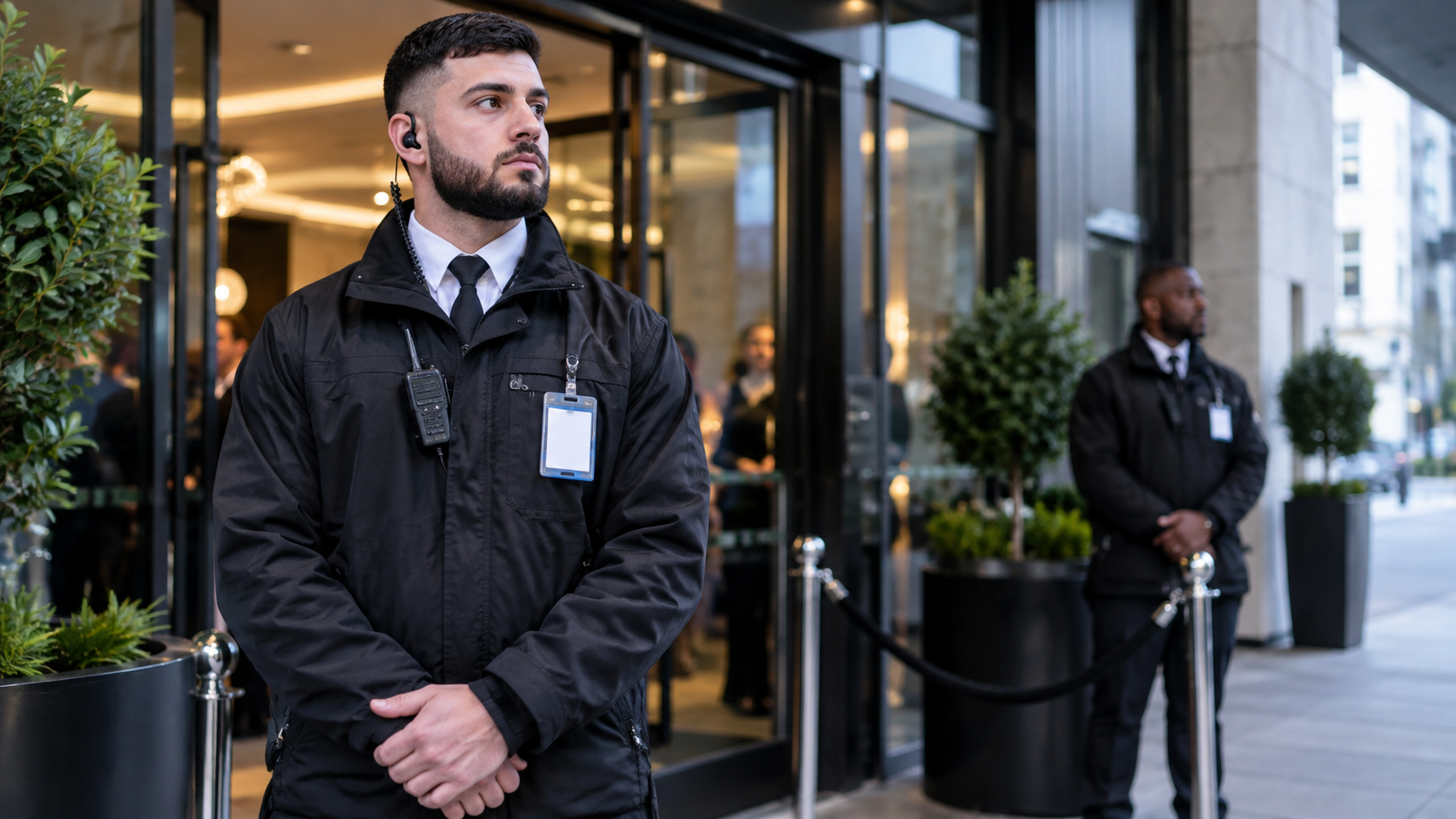
So, how do you actually get an SIA licence in 2026? Short answer: get your first aid certificate first, take the right Level 2 course, apply online with a clean five-year address history, and pay the £204 fee. That’s the whole process in one sentence. But the details the order you do things in, the paperwork traps, the 2026 rule changes are where most applications go wrong.
I’ve sat with dozens of applicants who thought they’d done everything right, only to watch the SIA bounce their application back over a mismatched name or a gap in their address history. This guide is the roadmap I wish someone had handed me the first time I went through it. By the end, you’ll know exactly which licence you need, what it costs, how long it takes, and how to avoid the delays that trip up almost everyone.
Key Takeaways
- Two main licences: Door Supervisor (pubs, clubs, events) and Security Guard (static guarding, retail, warehouses). You can hold both.
- Order matters: First aid (EFAW) before your licence-linked course, not after.
- Cost in 2026: The statutory fee is £204 per licence (the temporary £20 rebate ended 1 April 2026). Add training and first aid, and total costs land between roughly £430 and £750.
- Processing time: Around 25 working days is typical once your application is complete and correct.
- Renewal: Since 1 April 2025, refresher training is mandatory before you can renew. There’s no grace period if your licence lapses.
- Watch the calendar: BIIAB, a major awarding body, has lost SIA recognition; it cannot issue new licence-linked qualifications after 10 August 2026.
Why This Feels So Complicated And Why It Doesn't Have To
Here’s the thing nobody tells you upfront: the SIA licensing system isn’t actually complicated. It’s just scattered. The eligibility rules live on one GOV.UK page, the training requirements on another, the fee structure somewhere else entirely and the rules keep quietly shifting underneath you.
I remember helping a friend prep his Door Supervisor application a few years back. He’d done the training, passed the exam, felt ready. Then his application stalled for six weeks because one of his address documents was a joint bank statement, the same “source” as another document he’d submitted. Nobody had told him that two Group B documents need to come from different sources. He wasn’t careless. He just didn’t know a rule that isn’t obvious unless someone points it out.
That’s the real cost of not knowing this stuff: not failure, but delay. Weeks of lost work, lost income, lost momentum. So let’s fix that.
Which Licence Do You Actually Need?
Before you spend a penny on training, work out which licence actually matches the job you want.
Door Supervisor Licence: Who's this for?
If you’re working the door at a pub, nightclub, event venue, or festival, you need a Door Supervisor licence. This covers:
- Queue management and entry control
- Searching people and bags
- Conflict de-escalation
- Physical intervention, when it’s genuinely necessary
For the full eligibility criteria and training breakdown specific to this role, our Door Supervisor licence requirements guide walks through every prerequisite in detail.
Security Guard Licence: how is it different?
A Security Guard licence covers static guarding, retail loss prevention, corporate site security, and warehouse patrol work. The day-to-day looks different from door work: less confrontation management, more property protection and access control. For a broader overview of everything this licence involves, from Security Guard licence UK eligibility through to day-to-day duties, that’s the guide to reach for once you’ve confirmed this is the right path.
One distinction that trips people up: in-house employees guarding their own employer’s premises are often exempt from needing a licence at all. But that exemption doesn’t stretch to cover door supervision or vehicle immobilising; those always need a licence, in-house or not. If this is the licence you’re after, our complete guide to getting an SIA Security Guard licence covers the scope and exemptions in far more depth than there’s room for here.
Can you hold both licences at once?
Yes, and it’s worth doing if your work covers both. Applying for two licences on the same application form gets you a 50% discount on the second one. (More on that in the costs section, because the rules around this changed on 1 June 2026.)
What about CCTV Operator and other licence types?
Door Supervisor and Security Guard cover most people reading this, but they’re not the only licences the SIA issues. Public Space Surveillance (CCTV) licences cover monitoring roles in control rooms, town centre camera systems, retail surveillance hubs. Close Protection and Cash and Valuables in Transit licences exist too, but they sit at a different level of training intensity and usually aren’t the first licence someone gets. If your work is genuinely just camera monitoring rather than physical security, it’s worth checking whether CCTV Operator is actually the better (and often cheaper) fit before you commit to a six-day Door Supervisor course you don’t strictly need.
Section Takeaway
Match the licence to the actual job first: Door Supervisor for venues and conflict-facing roles, Security Guard for static and patrol work, then plan your training around that choice, not the other way round.
Eligibility: Can You Actually Apply?
Before you book any course, check you clear these basics:
- Age: You must be at least 18.
- Right to work: You need to be legally entitled to work in the UK.
- English language: You need to be able to read, write, speak, and understand English to a competent standard. The training and the exam are conducted in English.
- Criminal record: This is not an automatic disqualifier. The SIA assesses convictions case by case, weighing severity, relevance, and how long ago it happened.
A genuinely useful thing to know: the SIA’s approach to criminal record checks has gotten stricter recently. Checks on time spent overseas now look back 10 years instead of 5, and the list of offence categories the SIA weighs has been restructured to include things like human trafficking and domestic abuse offences. If you’ve spent extended time abroad, budget extra weeks for this stage; overseas checks are consistently the slowest part of the process.
Honest Limitation
I can’t tell you whether a specific conviction will bar you. The SIA doesn’t publish a simple list of “these offences mean automatic refusal.” If you have any criminal history, your safest move is to call the SIA directly before you spend money on training.
Can I get an SIA licence with a criminal record?
Sometimes, yes. The assessment weighs the type of offence, how long ago it happened, and the sentence. Minor, older, non-violent offences are treated very differently to recent convictions involving violence, dishonesty, or the specific categories the SIA has flagged as high-risk. This is genuinely one of the areas where guessing costs people money. I’ve spoken with people who assumed a spent conviction from a decade ago would automatically disqualify them, paid for training anyway just in case, and then found out it wouldn’t have mattered either way. Ask first. Train second.
Section Takeaway
Age, right to work, and English competency are yes/no checks anyone can clear in five minutes. Criminal record history is the one variable worth investigating properly before you commit money to training.
The Training Sequence: Get This Order Right
This is where most delays actually start, and it’s almost always because people do the steps out of order.
Step 1: First aid before anything else
Since 2021, a recognised first aid qualification, usually Emergency First Aid at Work (EFAW), has been a prerequisite for starting your licence-linked training. It typically costs £50–£150 and needs to have at least 12 months of validity remaining at the point you start your course. Book this first. I’ve seen people book their Door Supervisor course, show up on day one, and get turned away because their first aid certificate had six months left instead of twelve.
Step 2: The licence-linked qualification
- Door Supervisor: a six-day Level 2 course, roughly 44 hours, covering the law, searching procedures, conflict management, and physical intervention.
- Security Guard: a four-day Level 2 course, roughly 30 hours, covering patrol procedures, emergency response, and conflict management.
The 2026 curveball: BIIAB
Here’s something that genuinely wasn’t a concern a year ago. In July 2026, the SIA terminated its recognition agreement with the British Institute of Innkeeping Awarding Body (BIIAB), one of the largest awarding bodies for security qualifications, after inspections under the SIA’s “Operation RESOLUTE” uncovered persistent breaches of training standards. BIIAB was immediately barred from registering new learners, and it cannot issue any new licence-linked qualifications after 10 August 2026. Qualifications BIIAB issued before that date are still accepted.
My Bold Opinion Here: Don’t just pick a training provider based on price or location. Ask directly which awarding body they use, and cross-check it against the SIA’s current approved list. Highfield Qualifications, Pearson BTEC, Qualifications Network, SFJ Awards, and Trident Awards are the current alternatives. This one question could save you a repeated course and a repeated fee.
Section Takeaway
First aid comes before your main course, not alongside it, and in 2026 you need to actively confirm your training provider isn’t using an awarding body that’s lost SIA recognition.
What happens if I'm mid-course with a BIIAB-linked provider?
If you’ve already been awarded your qualification by BIIAB, the SIA will still accept it; the cut-off only affects new registrations and new qualifications issued after 10 August 2026. But if you’re currently enrolled and haven’t finished, or you’re waiting on a certificate, the honest answer is: contact your training provider immediately and ask them directly whether your certificate will be issued before that date. Don’t assume it will just because you started the course in good time. If there’s any doubt, ask about transferring to a provider using one of the other recognised awarding bodies rather than risking a qualification that never gets issued.
The Application Process Step by Step
Once training is done, here’s what actually happens. If you’d rather follow along with every screen and document requirement mapped out in order, our step-by-step application guide covers this whole process in more granular detail than we have room for here.
- Gather your documents. You need one Group A document (a passport) and two Group B documents (things like a bank statement and a utility bill) and the two Group B documents must come from different sources. You also need an unbroken five-year address history. Even a one-month gap in that history is enough to trigger a delay while the SIA asks you to account for it.
- Apply online through your SIA account on GOV.UK. Read everything twice before you submit; you cannot edit the application once it’s in.
- Pay the fee. £204 as of 1 April 2026, and it’s non-refundable, even if your application is later rejected.
- Book your Post Office ID check the moment you get the “next steps” message. You’ll need original documents, not copies.
- Wait through background checks. The SIA runs a DBS check, a right-to-work check, and verifies your qualification. Around 25 working days is typical for a clean application. If you’ve lived overseas for six months or more at any point, expect this to stretch considerably longer.
- Get approved. You can legally start working as soon as you have your grant letter and photo ID; you don’t need to wait for the physical card, which follows within about 14 days.
Anecdote: I once watched an applicant get held up for nearly three weeks because his passport photo page had a slightly different spelling of his middle name than his bank statement one had “Mohammed,” the other “Muhammad.” It sounds trivial. It wasn’t. The SIA flagged it as a discrepancy and asked for a supporting statement. Lesson: check every document for exact name matching before you submit anything.
Section Takeaway
The application itself is simple, but it’s unforgiving of small errors because you can’t edit it after submission; your prep work matters more than your speed.
What documents count as Group A and Group B?
Group A is your primary identity document, almost always a valid passport. Group B documents are supporting evidence of your identity and address: things like a recent bank or building society statement, a utility bill, a council tax statement, or a mortgage statement. The rule that catches people out is that your two Group B documents need to come from genuinely different sources; a bank statement and a credit card statement from the same banking group can sometimes be treated as related, so it’s worth diversifying (a utility bill plus a bank statement, for example) rather than assuming two different-looking documents are automatically “different sources.” If you’re applying specifically for guarding work rather than door supervision, our guide on how to apply for a Security Guard licence breaks down the same document rules alongside the Security Officer course specifics.
Costs: What You'll Really Pay in 2026
The £204 SIA fee is just one line item. Here’s the fuller picture:
| Licence Type | SIA Fee | Training | First Aid | Total Estimate |
| Door Supervisor | £204 | £250–£400 | £60–£150 | £514–£754 |
| Security Guard | £204 | £180–£300 | £50–£100 | £434–£554 |
| CCTV Operator | £204 | £180–£250 | Often not required | £384–£454 |
A few facts worth knowing about the 2026 fee changes:
- The fee itself hasn’t gone up since 2023. What ended on 1 April 2026 was a temporary £20 rebate the SIA had been funding from historical reserves since 2020. Once those reserves ran dry, the rebate stopped and the fee simply reverted to the statutory £204 it’s technically always been.
- The fee is non-refundable, full stop, even if the SIA later rejects your application over something you provided incorrectly.
- The multi-licence discount changed on 1 June 2026. You still get 50% off a second licence (£102 instead of £204), but only if you apply for both licences on the same form, on the same day. Apply for them separately, even a day apart, and you’ll pay full price for both.
Section Takeaway
Budget for training and first aid, not just the SIA fee and if you want two licences, apply for them together in one submission or you’ll lose the discount entirely. For a full line-by-line breakdown of every cost, including how the multi-licence discount plays out in practice, our SIA licence cost breakdown covers it in more detail than a single section allows.
Is the SIA licence fee going up again after 2026?
Nobody can say for certain, but it’s worth understanding the pattern so far. The statutory fee dropped from £210 to £204 in 2023 as part of a Managing Public Money review, and the SIA has been transparent that fees are meant to cover costs without producing a profit or a loss. That means fees get reviewed periodically rather than staying frozen indefinitely. My honest read: don’t expect another rebate like the one that just ended. If anything, the more likely direction over the next few years is upward, in line with the SIA’s own comparison to inflation-adjusted 2004 pricing. Budget for £204 and treat any future rebate as a bonus, not an assumption.
How to Speed Up Your Application
Speed here isn’t about rushing the SIA; it’s about not giving them a reason to pause your file. If your priority is to get your SIA Door Supervisor licence fast, the traps below are exactly where most of that lost time actually comes from:
- Names that don’t match exactly across your documents (nicknames, middle names, spelling variants).
- Gaps in your five-year address history, even short ones.
- Submitting two Group B documents that trace back to the same source (e.g., two statements from the same bank account).
- An EFAW certificate that’s expired, or doesn’t have enough validity left when your course starts.
- Sitting on the Post Office ID check instead of booking it immediately.
My Contrarian Rake: most guides tell you the fastest path is to “prepare early.” That’s true but incomplete. The actual fastest path is treating the Post Office ID verification step as urgent the second you’re invited to book it, not “sometime this week.” I’ve seen applications sit for ten extra days purely because the applicant treated that step as optional admin instead of the bottleneck it actually is.
Section Takeaway
Speed comes from eliminating friction points before submission, not from filling in the form quickly.
Renewal: Don't Let Your Licence Lapse
This is the section people skip until it’s urgent, and that’s exactly the wrong instinct.
There is no grace period. If your licence expires, you legally cannot work until a new one is granted not “cannot work until it’s processed,” but cannot work, full stop. If you’re carrying a Door Supervisor licence specifically, our guide to renewing your Door Supervisor licence without delays walks through the exact traps that catch people out at this stage; if it’s a Security Guard licence you’re renewing, how to renew your Security Guard licence covers the equivalent sequence for that route.
When to Start Renewing
You can renew up to four months before your licence expires. Renewing early doesn’t cost you anything; any remaining time on your current licence simply carries over.
The Mandatory Refresher (Since April 2025)
Since 1 April 2025, you cannot renew a Door Supervisor or Security Guard licence without completing mandatory refresher training first. It covers updated material on terrorism awareness, searching procedures, and safeguarding. The length depends on your licence and whether first aid is bundled in:
- Door Supervisor refresher: around 2 days on its own, or roughly 3 days if it includes the first aid element.
- Security Guard refresher: around half a day on its own, or roughly 1.5 days with first aid included.
The Correct Order for Renewal
- Confirm your EFAW certificate has at least 12 months’ validity remaining.
- Book and complete the refresher course.
- Apply online and pay the £204 fee.
- Wait roughly 10–20 working days for processing.
What if your licence has already lapsed?
You can’t simply “renew” an expired licence technically; you need a fresh application. The one piece of good news: if it’s been less than three years since expiry, you usually only need the refresher course and valid first aid, not the full original multi-day course from scratch.
Anecdote My Own Mistake: I once left a licence renewal until three weeks before expiry, assuming the refresher course would be easy to book anywhere, anytime. It wasn’t — the provider I wanted was full for a month. I ended up with a nine-day gap where I legally couldn’t work. It was avoidable, and it taught me to treat the four-month renewal window as the real deadline, not the expiry date itself.
Section Takeaway
Renewal has its own sequence: first aid, then refresher, then application and starting four months early protects you from a gap in your ability to work.
Key 2026 Rule Changes Don't Get Caught Out
| Date | Change |
| April 2021 | EFAW first aid became a prerequisite for starting licence-linked training. |
| April 2025 | Refresher training became mandatory before renewal. |
| Late 2025 | Overseas history checks extended to 10 years; criminality categories restructured. |
| 1 April 2026 | The £20 rebate ended; the fee reverted to £204. |
| 1 June 2026 | The multi-licence 50% discount now applies only when both licences are submitted on the same form. |
| 9–15 July 2026 | The SIA terminated its recognition agreement with BIIAB following training-standard breaches. |
| 10 August 2026 | BIIAB can no longer issue any new licence-linked qualifications. |
Section Takeaway
The rules that governed this process even 18 months ago aren’t fully accurate today; always cross-check dates against GOV.UK before you act on older advice, including some of what’s floating around in older blog posts and forums.
-
Tools, Resources & Next Steps
- GOV.UK’s official SIA licence application page – always the source of truth for the current fee and required documents.
- The SIA’s approved training provider search tool – use this to confirm your chosen provider’s awarding body is still recognised.
- Your SIA online account – where you’ll track your application status and, later, your renewal.
- A folder, physical or digital, with your ID, address history, and certificates gathered before you start the online form – this alone prevents most of the delays in Section 6.
Bringing It All Together
If there’s one thing this whole process teaches you, it’s that the SIA system rewards sequence, not speed. Check your eligibility, sort your first aid before your main course, choose a training provider whose awarding body is actually still recognised, gather your documents before you touch the online form, and start renewals four months out rather than four weeks out.
None of this is complicated on its own. It’s the ordering that trips people up and now you have it laid out in the right order. Rules do shift quietly, so before you commit money, it’s always worth a quick cross-check against GOV.UK or a conversation with a training provider you trust.
Whether you’re heading toward a Door Supervisor licence or a Security Guard licence, the roadmap is the same: eligibility, first aid, training, application, and eventually renewal. Get that sequence right, and the SIA licence process stops feeling like a maze and starts feeling like exactly what it is: a checklist.
FAQs
How long does it take to get an SIA licence?
For a clean, correctly-documented application, roughly 25 working days is typical. Overseas address history, criminal record complexities, or document errors can extend that significantly.
Can I work while my application is being processed?
No. You need your grant letter and photo ID in hand before you can legally start. Processing time isn’t something you can work through in parallel.
What happens if my SIA licence lapses before I renew it?
You can’t legally work until a new licence is granted. If it’s been under three years since expiry, you typically only need the refresher course and valid first aid rather than the full original training.
Do I need a Door Supervisor licence to work as an in-house security guard?
Usually not, if you’re purely guarding your own employer’s premises, but that exemption doesn’t extend to door supervision duties or vehicle immobilising, which always require a licence.
Can I do the training without a first aid certificate?
No. EFAW (or an accepted equivalent) has been a prerequisite for starting licence-linked training since 2021, and it needs at least 12 months of validity left when your course begins.
Why is my training provider's qualification suddenly at risk?
If your provider uses BIIAB as its awarding body, check the timing carefully. BIIAB cannot issue any new SIA licence-linked qualifications after 10 August 2026. Qualifications issued before that date are still accepted.
What's the real cost of an SIA licence in 2026?
Budget for the £204 statutory fee plus training and first aid, typically £514–£754 all-in for a Door Supervisor licence, or £434–£554 for a Security Guard licence.
This is custom heading element
These six principles are still applicable when working in writing: make it relevant right from the start; allow for self-directed options (e.g., choice of pace or module sequence); allow for discussion and the sharing of experiences; make use of problem-centred activities; allow for personal motivation (e.g., progress and recognition).